Evaluating Calligraphic Swirl Line Border Elements for Professional Design
In the landscape of graphic design, borders and dividers often serve as the unsung heroes of layout composition. While typography and imagery typically command the spotlight, structural elements like Calligraphic Swirl Line Border Elements provide the necessary visual framework that guides the reader’s eye and establishes tonal consistency. For designers, marketers, and content creators, the challenge is rarely finding decorative assets; rather, it is locating high-quality, versatile resources that integrate seamlessly into diverse workflows without compromising resolution or aesthetic integrity.
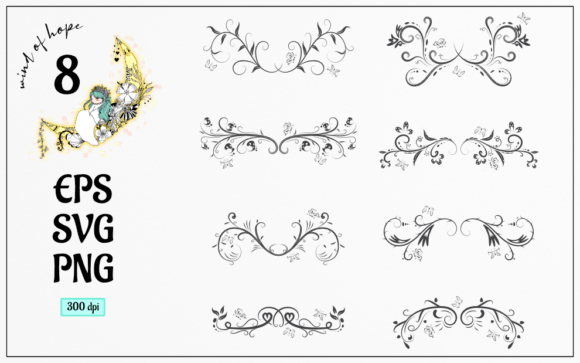
This analysis explores the practical utility of these specific calligraphic assets, examining their technical specifications, design flexibility, and real-world application across various professional contexts. By understanding what is included in the standard package—specifically the EPS, SVG, and high-resolution PNG files—creators can better determine if these elements align with their project requirements.
The Aesthetic and Functional Role of Calligraphic Borders
Calligraphy-inspired design elements carry a distinct weight in visual communication. Unlike geometric or minimalist lines, calligraphic swirls evoke a sense of tradition, elegance, and handcrafted attention to detail. When utilized correctly, Calligraphic Swirl Line Border Elements do more than frame content; they elevate the perceived value of the material. This is particularly relevant for industries where trust, sophistication, and heritage are key brand attributes, such as wedding planning, luxury retail, legal services, and premium publishing.
The primary function of these borders is segmentation. In long-form content, such as white papers, menus, or certificates, visual fatigue can set in if the text appears as an unbroken wall of words. Swirl lines act as gentle pauses, allowing the reader to reset before moving to the next section. However, the effectiveness of this function depends entirely on the quality of the asset. Poorly drawn vectors or pixelated raster images can detract from professionalism, making the design appear amateurish. Therefore, the technical delivery format of these elements is just as critical as their visual style.
Technical Specifications and File Format Utility
When evaluating digital design assets, the file formats provided determine the longevity and versatility of the resource. The package containing Calligraphic Swirl Line Border Elements typically includes three distinct formats: EPS, SVG, and PNG. Each serves a specific purpose in a professional workflow.
Vector Formats: EPS and SVG
The inclusion of EPS (Encapsulated PostScript) and SVG (Scalable Vector Graphics) files is the most significant advantage of this collection. Vector graphics are defined by mathematical paths rather than pixels, meaning they can be scaled infinitely without any loss of quality. For a designer working on a large-format print project, such as a banquet hall backdrop or a trade show banner, the ability to enlarge a delicate swirl line without encountering jagged edges is indispensable.
Furthermore, vector files offer complete editability. In applications like Adobe Illustrator, CorelDRAW, or Affinity Designer, users can modify the stroke weight, change the color to match specific brand guidelines, or even adjust the curvature of the swirls. This level of customization ensures that the border elements do not look like generic clipart but rather like bespoke components of the overall design system. The SVG format is particularly valuable for web developers and UI designers, as it allows for lightweight, crisp rendering on websites and mobile applications, ensuring fast load times and sharp display on retina screens.
Raster Formats: High-Resolution PNGs
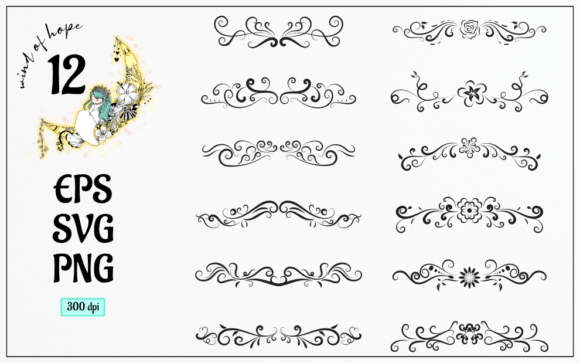
While vectors are ideal for editing and large-scale printing, raster images remain essential for quick implementation in non-vector environments. The package includes 12 PNG files at 300 DPI with translucent backgrounds. The 300 DPI (dots per inch) resolution is the industry standard for high-quality printing, ensuring that the lines remain crisp when printed on business cards, invitations, or brochures.
The translucent background is a crucial feature. It allows designers to place the swirl elements over photographs, textured papers, or colored backgrounds without having to manually remove a white box around the image. This transparency saves significant time in software like Photoshop, Canva, or Microsoft Word, where advanced masking tools may not be available or practical to use. Having twelve variations provides a range of orientations and complexities, offering enough diversity to prevent repetitive patterns in multi-page documents.
Practical Applications Across Industries
The versatility of Calligraphic Swirl Line Border Elements makes them suitable for a wide array of professional applications. Understanding where these assets perform best can help creators maximize their return on investment.
- Event Stationery: Weddings, galas, and formal dinners rely heavily on elegant typography and decorative flourishes. These swirls can frame menu cards, seat assignments, and invitation suites, adding a layer of sophistication that plain lines cannot achieve.
- Certificates and Awards: Academic institutions and corporate training programs often issue certificates of completion. A calligraphic border provides the traditional framing expected in these formal documents, lending authority and prestige to the award.
- Brand Identity for Luxury Markets: Boutique hotels, spas, and jewelry brands often use subtle decorative elements in their packaging and marketing materials. These swirls can be used as dividers in lookbooks or as accent pieces on product tags.
- Digital Content and Blogging: For bloggers and online publishers, the SVG or PNG files can be used to break up long articles, separate quotes, or frame featured images, enhancing the readability and visual appeal of web pages.
Usability and Workflow Integration
From a usability perspective, the value of any design asset lies in how easily it integrates into existing workflows. The combination of vector and raster files in this package addresses the needs of both professional designers and non-designers. Professionals will appreciate the editable nature of the EPS and SVG files, allowing for precise control over every anchor point. Meanwhile, small business owners, educators, and hobbyists who may rely on drag-and-drop platforms like Canva or PowerPoint can utilize the PNG files effectively without needing advanced technical skills.
Consistency is another key factor. When using multiple border elements in a single project, such as a multi-page menu or a comprehensive report, it is vital that the line weights and stylistic flourishes remain consistent. Since these elements are part of a cohesive set, they share a unified design language. This ensures that the final output looks polished and intentional, rather than a patchwork of disparate styles sourced from different providers.
Limitations and Considerations
While Calligraphic Swirl Line Border Elements offer significant value, it is important to recognize their limitations to manage expectations. These elements are inherently decorative and stylistic. They may not suit brands that prioritize ultra-modern, minimalist, or industrial aesthetics. In such cases, the ornate nature of calligraphy could clash with the desired brand voice.
Additionally, while the transparent PNGs are convenient, they are static. If a user needs to change the color of the border frequently for different campaigns, the vector files are the superior choice. Relying solely on the PNGs limits flexibility. Users should also be mindful of overuse. Because these elements are visually distinct, using too many swirls in a single layout can create clutter and distract from the core message. Restraint and strategic placement are key to maintaining a clean, professional appearance.
Final Assessment of Value
In conclusion, the Calligraphic Swirl Line Border Elements package represents a practical and versatile resource for a broad spectrum of creators. The inclusion of both vector (EPS, SVG) and high-resolution raster (PNG) formats ensures that the assets are future-proof and adaptable to both print and digital media. For professionals, the editability of the vectors offers long-term utility across multiple client projects. For entrepreneurs and hobbyists, the ready-to-use PNGs provide an immediate upgrade to the visual quality of their materials.
Ultimately, the decision to incorporate these elements should be driven by the specific aesthetic goals of the project. For those seeking to convey elegance, tradition, or refined detail, these calligraphic borders provide a reliable, high-quality solution that enhances visual hierarchy without overwhelming the design. By understanding the technical strengths and appropriate applications of these files, users can leverage them to create more engaging, professional, and visually coherent communications.