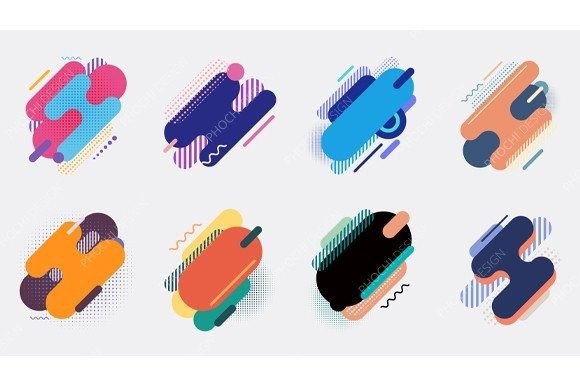
Mastering Visual Balance with Set of Rounded Lines Geometric Elements
In the evolving landscape of digital design, the shift away from rigid, sharp-edged structures toward softer, more organic forms has become increasingly prominent. Designers and content creators are constantly seeking assets that bridge the gap between modern minimalism and approachable warmth. This is where a Set of Rounded Lines Geometric Elements becomes an invaluable resource. These vector illustrations offer a versatile foundation for creating layouts that feel both structured and fluid, catering to a wide array of professional and creative needs.
The appeal of these graphics lies in their inherent flexibility. Unlike pixel-based images that lose quality when scaled, vector graphics maintain crisp edges at any size. When you utilize a collection of rounded geometric shapes, you are investing in a toolset that adapts seamlessly to everything from large-format print banners to high-resolution mobile interfaces. The isolation of these elements on a white background further enhances their utility, providing ample copy space and ensuring that integration into existing designs requires minimal effort.
The Strategic Advantage of Vector Precision
One of the most critical aspects of professional graphic design is resolution independence. A standard raster image might look acceptable on a screen but can appear pixelated and unprofessional when printed on marketing materials or merchandise. In contrast, a file provided in high resolutions such as 300dpi, combined with 100% vector architecture, ensures that every curve and line remains perfect regardless of the output medium.
When working with a Set of rounded lines geometric elements isolated on white background, designers gain the ability to scale assets infinitely without degradation. This is particularly important for branding consistency. Whether a logo variant needs to be stamped on a business card or blown up for a trade show booth, the integrity of the design must remain intact. Vector formats like EPS allow for this scalability, while JPG previews offer quick visualization for mood boards and initial client presentations.
Furthermore, the editable nature of these shapes empowers creators to tailor the visuals to specific brand guidelines. Colors can be adjusted instantly to match corporate palettes, and shapes can be manipulated to fit unique spatial constraints. This level of customization transforms a static graphic into a dynamic component of a broader visual identity system.
Enhancing User Experience Through Soft Geometry
Psychologically, sharp angles and aggressive lines can convey tension or urgency, whereas rounded corners and curved lines evoke feelings of safety, comfort, and approachability. In user interface (UI) and user experience (UX) design, this distinction is crucial. Incorporating a Set of Rounded Lines Geometric Elements into web layouts or application interfaces can subtly influence how users perceive a brand.
For educational platforms and healthcare websites, where trust and clarity are paramount, soft geometric backgrounds can reduce cognitive load. They guide the eye naturally across the page without creating visual barriers. By using these elements as subtle background textures or section dividers, educators and researchers can create materials that are engaging yet easy to digest. The copy space provided by the isolated design allows text to breathe, improving readability and retention.
Consider the example of a hobbyist blog or a lifestyle e-commerce store. Harsh, industrial designs might alienate a audience looking for relaxation and inspiration. Instead, flowing, rounded lines create a harmonious atmosphere that encourages browsing and interaction. This practical application of geometric theory demonstrates how aesthetic choices directly impact functional outcomes.
Versatile Applications Across Industries
The utility of high-quality vector illustrations extends far beyond traditional graphic design. Various sectors can leverage these assets to enhance their communication strategies. Below are several key areas where a Set of rounded lines geometric elements proves exceptionally useful:
- Corporate Branding: Companies can use these elements to soften their visual identity, making large corporations appear more human-centric and accessible.
- Digital Marketing: Social media posts, email newsletters, and ad banners benefit from the clean, modern look of rounded geometry, which stands out in crowded feeds without being overwhelming.
- Presentation Decks: Business professionals can elevate PowerPoint or Keynote presentations by replacing bullet points with visually engaging geometric infographics.
- Packaging Design: The scalable nature of vector files makes them ideal for product packaging, where designs must look sharp on both small labels and large boxes.
- Educational Materials: Textbooks, worksheets, and online courses can use these shapes to organize information, highlight key concepts, and break up dense text blocks.
Each of these applications benefits from the well-organized structure of the source files. When graphics are layered logically and named appropriately, workflow efficiency increases significantly. Designers spend less time searching for specific components and more time focusing on creative composition.
Technical Considerations for Optimal Usage
To fully leverage the potential of a Set of Rounded Lines Geometric Elements, it is essential to understand the technical specifications provided. The inclusion of both EPS and JPG formats covers the spectrum of immediate and long-term needs. JPG files are suitable for quick web uploads, social media sharing, and preliminary reviews. They are universally compatible and easy to handle for non-designers.
However, the true power lies in the EPS files. As a vector format, EPS allows for deep editing within professional software such as Adobe Illustrator, CorelDRAW, or Affinity Designer. Users can ungroup elements, modify anchor points, and change stroke weights. This editability is crucial for maintaining a unique look. Rather than using the graphics exactly as downloaded, creators can combine different lines, rotate elements, and adjust opacity to create custom compositions that feel bespoke rather than stock.
Additionally, the absence of watermarks ensures that the final output is clean and professional. For business owners and creators, this means no legal ambiguities or visual distractions. The high resolution of 300dpi ensures that even if a rasterized version is needed for specific print processes, the quality remains superior to standard screen-resolution assets.
Integrating Geometric Elements into Your Workflow
Implementing these graphics into your daily creative process does not require advanced technical skills, but it does benefit from a strategic approach. Start by identifying the core message of your project. If the goal is to convey innovation and fluidity, select the more dynamic, flowing lines from the set. If the objective is stability and structure, opt for the more symmetrical, balanced shapes.
Next, consider color theory. While the default black lines on a white background offer high contrast and clarity, changing the colors can drastically alter the mood. Pastel tones can create a calming effect, while bold, saturated colors can draw attention to specific calls to action. Because the shapes are 100% vector, experimenting with color combinations is risk-free and reversible.
It is also important to respect negative space. The "copy space" mentioned in the asset description is not just empty area; it is a design element in itself. Use the rounded lines to frame your content, directing the viewer’s focus to the text or primary image. Avoid cluttering the design with too many overlapping elements. The elegance of geometric minimalism relies on balance and restraint.
Future-Proofing Your Design Assets
As digital displays continue to evolve with higher pixel densities and varied aspect ratios, the demand for scalable, adaptable graphics will only increase. Investing in a comprehensive Set of rounded lines geometric elements isolated on white background is a forward-thinking strategy. It ensures that your visual content remains relevant and high-quality across current and future platforms.
Moreover, the trend towards personalized and dynamic content means that static images are often insufficient. Vector elements can be easily animated for web interactions or video content. The clean paths and organized layers make these files ideal for motion graphics, allowing designers to bring static shapes to life with smooth, fluid animations.
In conclusion, the value of these geometric elements extends beyond their aesthetic appeal. They represent a practical, efficient, and versatile solution for a broad audience of creators. Whether you are a seasoned designer looking to streamline your workflow, a business owner aiming to enhance your brand’s visual appeal, or an educator seeking to engage students, these vector graphics provide the foundational tools needed to create compelling, professional-grade content. By understanding their characteristics and applying them strategically, you can elevate your visual communication and achieve greater impact in your respective field.