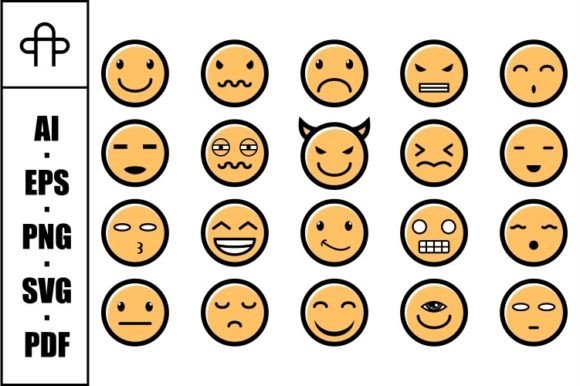
Mastering Digital Communication with Collection Emoticon Expression Vector Assets
In the rapidly evolving landscape of digital design, the ability to convey emotion quickly and universally has become paramount. Text alone often fails to capture the nuance of human interaction, leading to misunderstandings or a lack of engagement in user interfaces, marketing materials, and social media content. This is where a high-quality Collection Emoticon Expression Vector becomes an indispensable resource for designers, developers, and brand managers. Unlike standard raster images, vector-based emoticons offer scalability, flexibility, and professional polish that static JPEGs or PNGs simply cannot match.
When you invest in a comprehensive library that includes files in AI, EPS, SVG, PDF, and PNG formats, you are not just buying icons; you are acquiring a versatile toolkit that adapts to any project requirement. Whether you are building a mobile application, designing a corporate presentation, or creating engaging social media graphics, having access to a robust collection of expression vectors ensures consistency and visual appeal across all platforms.
The Strategic Advantage of Vector-Based Expressions
The primary distinction between a standard image file and a vector illustration lies in its mathematical construction. A Collection emoticon expression vector illustration is built using paths, points, and curves rather than pixels. This fundamental difference offers several critical advantages for modern workflows.
First and foremost is infinite scalability. In today’s multi-device world, your designs must look crisp on everything from a tiny smartwatch screen to a massive 4K monitor. Raster images pixelate when enlarged, resulting in a blurry, unprofessional appearance. Vector files, however, can be resized to any dimension without losing quality. This makes them ideal for responsive web design, where icons need to adapt dynamically to different screen sizes and resolutions.
Secondly, vectors offer unmatched editability. When you purchase a package that includes AI (Adobe Illustrator) and EPS files, you gain full control over every element of the design. You can change colors to match your brand identity, adjust line weights for better visibility, or modify specific facial features to create custom variations. This level of customization is impossible with flattened image formats, allowing your team to maintain strict brand consistency while still leveraging pre-made assets to save time.
Understanding the File Formats: AI, EPS, SVG, PNG, and PDF
A professional-grade asset pack typically includes multiple file formats to ensure compatibility with various software and use cases. Understanding how to utilize each format effectively can significantly streamline your design process.
- AI (Adobe Illustrator): This is the native format for Adobe Illustrator. It preserves all layers, effects, and editable properties. Use this file when you need to make significant modifications to the base design or integrate the emoticons into larger vector compositions.
- EPS (Encapsulated PostScript): A universal vector format compatible with most graphic design software, including CorelDRAW and Inkscape. EPS files are excellent for print projects and when sharing assets with collaborators who may not use Adobe products.
- SVG (Scalable Vector Graphics): The gold standard for web development. SVGs are code-based, meaning they load quickly, are accessible to screen readers, and can be animated or styled using CSS. Including SVG per items allows developers to implement interactive hover states or dynamic color changes directly in the browser.
- PNG (Portable Network Graphics): While not vector-based, high-resolution PNGs are essential for quick implementation in contexts where vector editing is not required, such as social media posts, email signatures, or presentations. They provide transparency support, ensuring the emoticons blend seamlessly into any background.
- PDF (Portable Document Format): Useful for viewing proofs, sharing with clients who do not have design software, or incorporating into printed documents where vector quality is maintained.
Enhancing User Experience and Brand Personality
Emoticons are more than just decorative elements; they are powerful tools for enhancing user experience (UX) and establishing brand personality. A well-curated Collection Emoticon Expression Vector can humanize digital interactions, making them feel more warm, approachable, and intuitive.
Consider a customer support chatbot. Instead of responding with cold, robotic text, the interface can display a sympathetic or helpful emoticon. This subtle visual cue can reduce user frustration and increase satisfaction. Similarly, in gamified applications, celebratory expressions can reinforce positive behavior, encouraging users to complete tasks or achieve goals.
From a branding perspective, the style of your emoticons speaks volumes about your company’s identity. A minimalist, line-art style suggests sophistication and modernity, suitable for fintech or luxury brands. Conversely, bold, colorful, and playful expressions might align better with children’s educational apps or lifestyle brands targeting a younger demographic. By choosing a vector collection that aligns with your visual language, you ensure that every touchpoint reinforces your brand message.
Practical Applications Across Industries
The versatility of vector emoticons extends far beyond social media. Here are several industries and scenarios where these assets prove invaluable:
- E-Commerce and Retail: Use happy or surprised expressions in post-purchase emails to enhance customer delight. Product reviews can feature star ratings accompanied by expressive faces to summarize sentiment at a glance.
- Education and E-Learning: Interactive learning modules benefit greatly from visual feedback. Correct answers can trigger a cheerful emoticon, while incorrect responses might show a thoughtful or encouraging face, keeping learners engaged without discouraging them.
- Healthcare and Wellness: Apps tracking mood, sleep, or fitness can use emoticons to help users log their daily status quickly. The visual nature of these inputs reduces friction and encourages consistent usage.
- Corporate Communications: Internal newsletters and presentations can use professional yet friendly emoticons to break up text-heavy slides, making information more digestible and engaging for employees.
Workflow Integration and Efficiency
Time is a precious commodity in creative projects. Starting from scratch to design a cohesive set of emoticons can take days or even weeks. By leveraging a pre-made Collection emoticon expression vector illustration, you can cut down production time significantly. However, the key to maximizing this efficiency lies in proper organization and integration.
Most high-quality packs come with files organized by category or expression type. Taking a few minutes to familiarize yourself with the folder structure can save hours later. For web projects, consider optimizing the SVG files by removing unnecessary metadata and minifying the code. This ensures faster load times without compromising visual quality.
For teams working in collaborative environments, establishing a style guide for how these emoticons are used is crucial. Define clear rules regarding size, color usage, and context. For instance, specify which expressions are appropriate for error messages versus success states. This prevents inconsistent application and maintains a polished, professional look across all deliverables.
Considerations Before Choosing Your Collection
Not all vector collections are created equal. Before purchasing or downloading a Collection Emoticon Expression Vector, consider the following factors to ensure it meets your needs:
Style Consistency: Ensure that all icons in the collection share the same line weight, corner radius, and overall aesthetic. Inconsistent styles can make your design look amateurish.
Expression Range: Does the collection cover the full spectrum of emotions you need? Look for packs that include not just happy and sad, but also nuanced expressions like confusion, excitement, skepticism, and neutrality.
License Terms: Always check the licensing agreement. Some free resources may restrict commercial use, while premium packs often offer broad rights for personal and client projects. Ensure the license covers all intended uses, including web, print, and app distribution.
Technical Quality: Open a sample file to check for clean paths and properly grouped layers. Messy vector files can be difficult to edit and may cause issues when exporting to other formats.
By carefully selecting a high-quality, versatile vector collection, you equip your team with the tools needed to create engaging, emotionally resonant digital experiences. The investment in professional-grade assets pays dividends in improved user engagement, brand consistency, and operational efficiency. As digital communication continues to dominate our interactions, the role of visual language becomes increasingly central, making these vector resources not just nice-to-haves, but essential components of modern design strategy.